
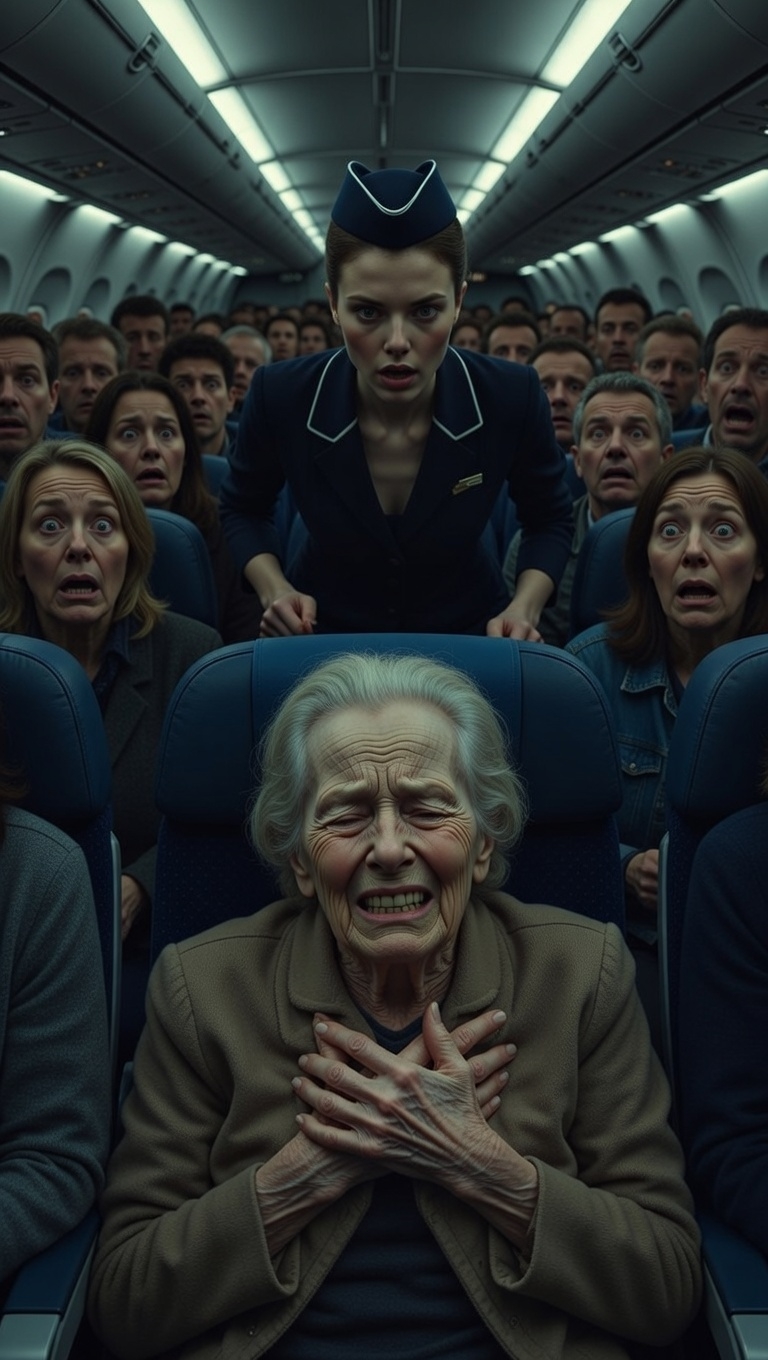
« Midnight Over the Atlantic – A Stroke, Silence, and One Woman’s Courage »
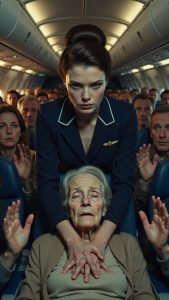
« Midnight Over the Atlantic – A Stroke, Silence, and One Woman’s Courage »
It was a red-eye flight from Paris to New York, the kind where most passengers dim the lights, pull up blankets, and drift into uneasy sleep at 35,000 feet. The cabin was half-full, a quiet mix of business travelers, families returning from vacation, and a few lone souls like Margaret Ellis, an 82-year-old widow from Lyon traveling to see her grandchildren in Brooklyn for what she hoped would be one last Christmas.
Margaret had always loved flying. Even at her age, the hum of the engines felt like a lullaby. She sat by the window in row 22, frail shoulders wrapped in a beige cardigan, white hair neatly pinned, a small photo album of her late husband open on her lap. She smiled softly at the dark clouds below, whispering to herself in French, « Almost there, mon chéri. »
Then it happened.
Around 2:17 a.m. cabin time, Margaret’s right hand suddenly dropped the album. Her face twisted—first confusion, then sharp pain. She clutched her temple, eyes widening in terror as the world tilted sideways. A low, guttural moan escaped her lips. Her body slumped against the seat, head lolling, chest heaving in shallow, frantic bursts. Sweat beaded on her pale forehead. It was a massive stroke, the kind that steals speech, movement, and time itself.
The passengers around her froze.
The man in the aisle seat, a middle-aged businessman scrolling on his phone, glanced over and recoiled. His eyes darted away, as if looking might make it real. Across the aisle, a young couple whispered urgently but stayed seated, hands gripping each other. Further back, heads turned slowly—wide eyes, mouths half-open—but no one moved. The cabin, usually a place of forced politeness, became a theater of hesitation. Whispers rippled: « Is she okay? » « Should we call someone? » Yet the seconds stretched into agonizing silence. No one stood. No one shouted for help. The collective shock felt like betrayal—dozens of able-bodied strangers, paralyzed by fear or denial, watching a life slip away.
Margaret’s breathing grew ragged. Tears streamed down her wrinkled cheeks. In her mind, flashes: her husband’s funeral, her grandchildren’s faces, the unbearable thought that this metal tube in the sky would be her end. She tried to speak, but only a weak, broken « Aidez-moi… » escaped—help me.
Then came Sarah Laurent, the senior flight attendant on duty.
Sarah, 34, athletic build, intense green eyes framed by a tight chignon, had been restocking the galley when the call button lit up. She moved quickly down the aisle, her navy uniform crisp despite the long hours. One look at Margaret and she knew—this was no faint, no panic attack. The woman’s face drooped on one side, arm limp, confusion and fear in those dulling blue eyes.
Sarah didn’t hesitate.
She dropped to her knees in the narrow space, voice calm but commanding: « Ma’am, stay with me. I’m here. » No time for pleasantries. She gently tilted Margaret’s head back to open the airway, checked for a pulse—weak, erratic—then began chest compressions with precise, rhythmic force. The cabin lights flicked brighter as other crew members rushed in with the onboard medical kit and defibrillator.
Passengers now stirred—some standing, others filming with phones (a modern humiliation in itself). The businessman finally spoke: « Do you need help? » But Sarah was already in motion, directing a nurse passenger who’d finally come forward to assist with oxygen. She spoke into her radio: « Medical emergency, row 22, possible stroke. Request immediate diversion if needed. Passenger unresponsive. »
The captain’s voice came over the PA, steady but urgent: « Ladies and gentlemen, we have a medical situation onboard. We’re beginning descent to the nearest suitable airport—Boston. Please remain seated. »
Sarah never stopped. For what felt like an eternity—eighteen agonizing minutes—she alternated compressions and breaths, sweat soaking her uniform, arms burning. Margaret’s eyes fluttered; a faint gasp. The color began returning to her face. Sarah whispered, « You’re doing great. Hold on for your family. »
When the plane touched down in Boston, paramedics boarded within seconds. They stabilized Margaret on a stretcher, rushed her to Massachusetts General Hospital. Doctors later confirmed: ischemic stroke, caught just in time. With quick intervention, she avoided permanent paralysis or worse. Two days later, she was stable, speaking again—weakly, but clearly—thanking everyone, especially « the angel in blue. »
Sarah Laurent never sought praise. In her debrief, she simply said, « It’s what we’re trained for. But in that moment, it wasn’t training—it was instinct. Seeing her eyes… I couldn’t let her go. »
Margaret recovered enough to make it to Brooklyn a month later. She hugged her grandchildren, tears in her eyes, and sent Sarah a handwritten card: « You gave me back my life when everyone else looked away. Merci, du fond du cœur. »
In a world where strangers often turn away, one woman’s courage reminded everyone: sometimes, the difference between life and death is just one person who refuses to freeze.
Read more about real-life airline heroics or share your own story below—what would you do in that cabin?